Debunking the top 4 myths of hybrid training

Every few months someone tells me hybrid training does not work — that you have to pick a lane. Six years in, I have run a 100-miler and squatted more than I did when I only lifted. The problem is almost never the concept. It is the execution.
Myth 1: you will lose all your strength
The interference effect is real, but it is far smaller and far more manageable than the internet suggests. What actually costs you strength is running hard the day before a heavy lower session, not running per se. Separate the two by 24 hours and most of the conflict disappears.
Practically: heavy lower on Monday, easy aerobic Tuesday, and never the reverse. If you only take one thing from this piece, take the ordering.
The interference effect is a scheduling problem, not a physiology problem.
Myth 2: you need a surplus to make progress
You need a surplus to add appreciable mass. You do not need one to get meaningfully stronger, faster or better conditioned. Most hybrid athletes are not under-eating calories — they are under-eating carbohydrate around the sessions that need it.
- 60–90g carbohydrate per hour for anything over 90 minutes
- Protein at 1.6–2.2g per kg, spread across four feedings
- Sodium in the bottle, not on the plate, once you are sweating for over an hour
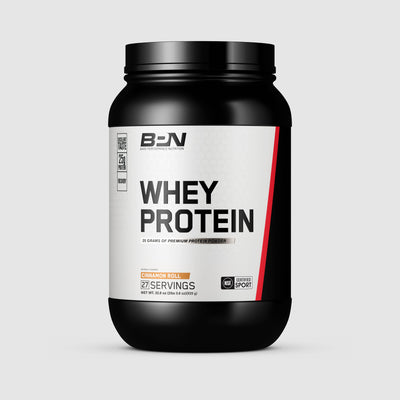
For sessions like that, we lean on our whey protein to hit those protein tarnd cooler bag to the gym run.
Myth 3: two sessions a day is the only way
Doubles are a tool for people whose life allows them, not a requirement. A single session that combines a strength focus with 20–30 minutes of quality aerobic work at the end is enough to move both needles for the first two years.
[[summary]]